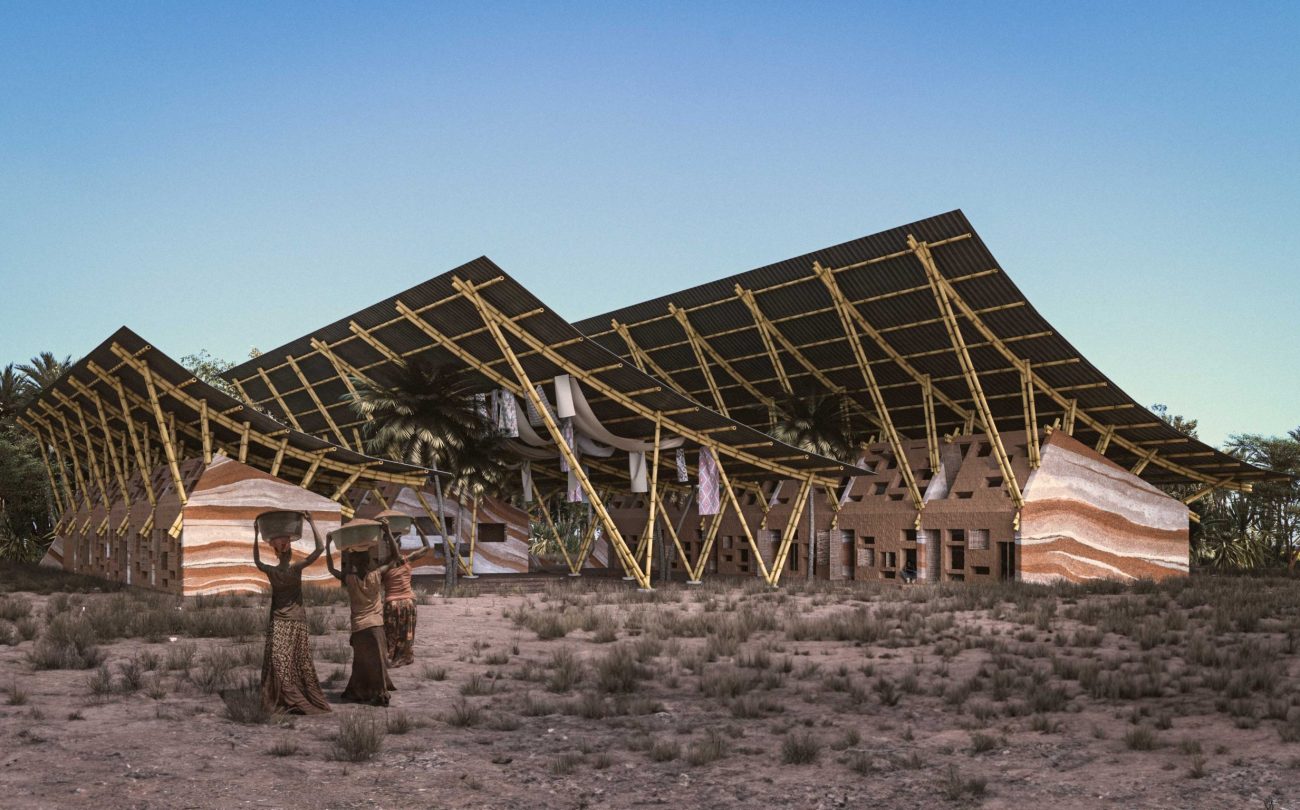
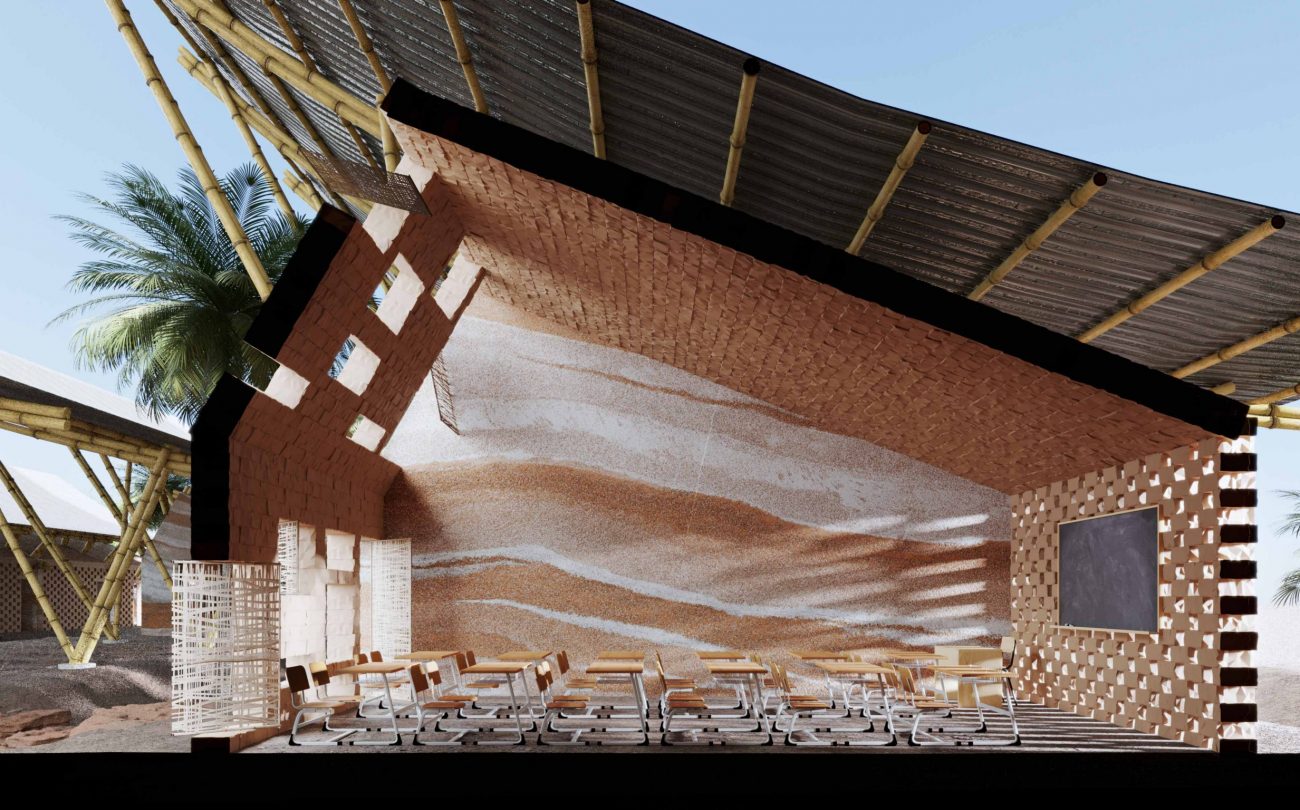
The design concept aims to create a prototype school that can be easily adapted to various locations in southern Senegal, while benefiting the society in a sustainable manner. The project prioritizes sustainability and design flexibility as its key objectives. User comfort is ensured through bioclimatic design strategies, including natural ventilation, passive cooling, and maximizing daylight.
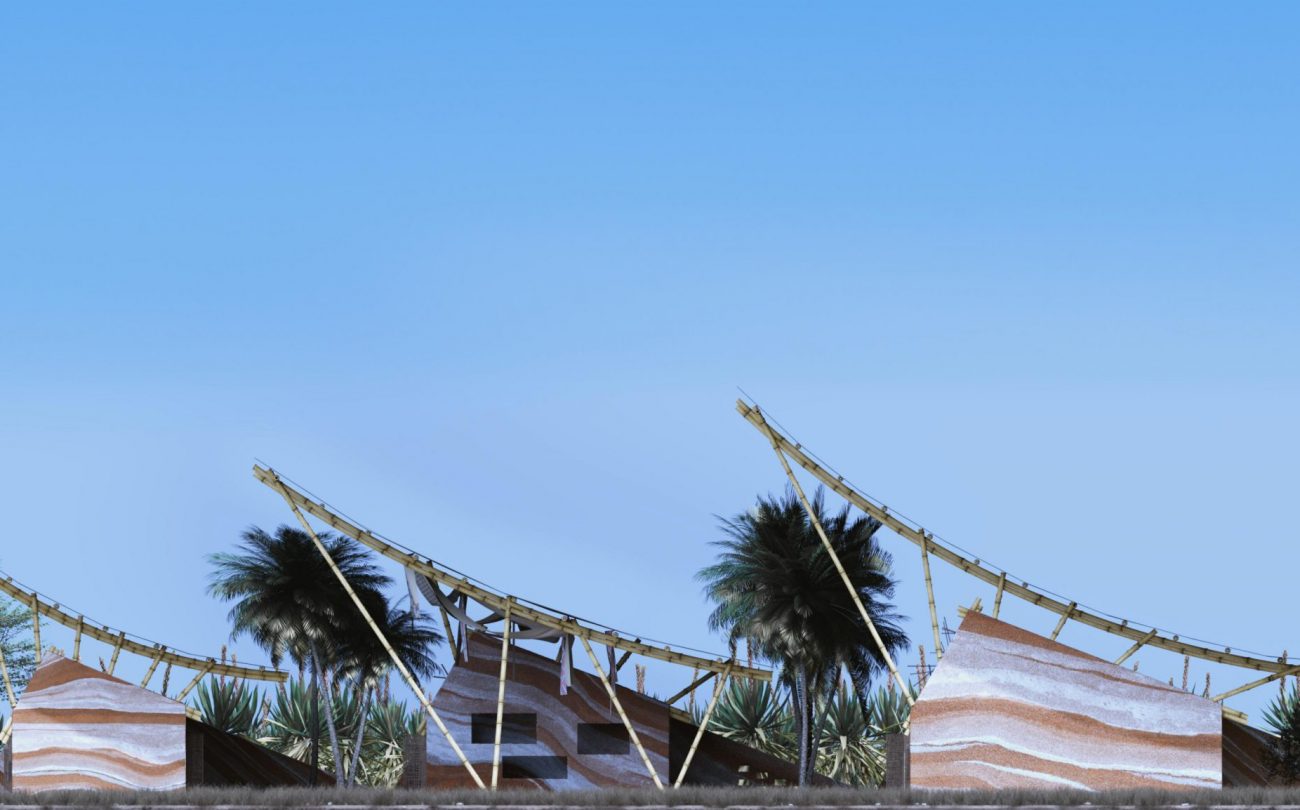
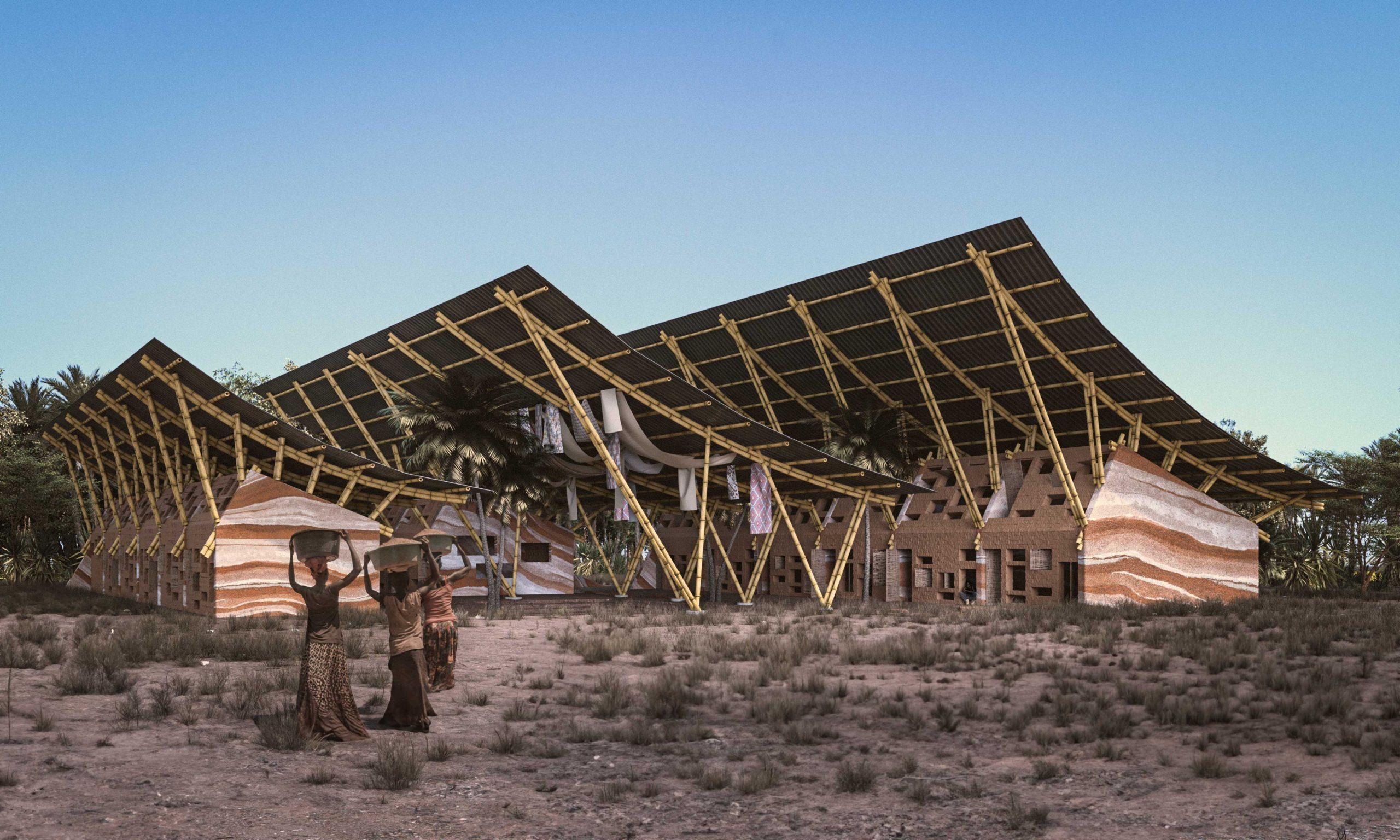
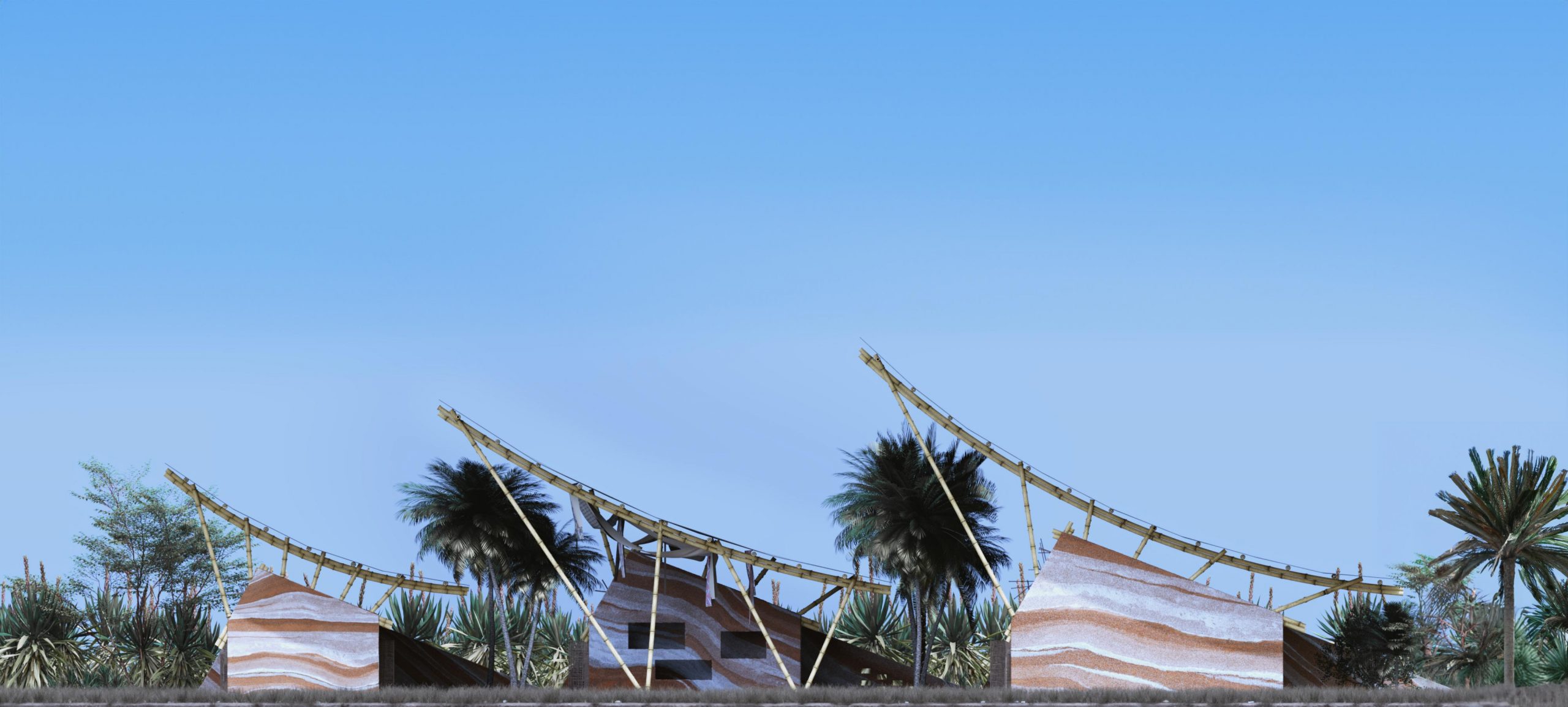
A modular system is implemented, forming distinct masses that are strategically positioned based on climate conditions, sun path, and wind directions. The school possesses the capacity to expand, adapt, and transform within this modular system, ensuring sustainable growth.
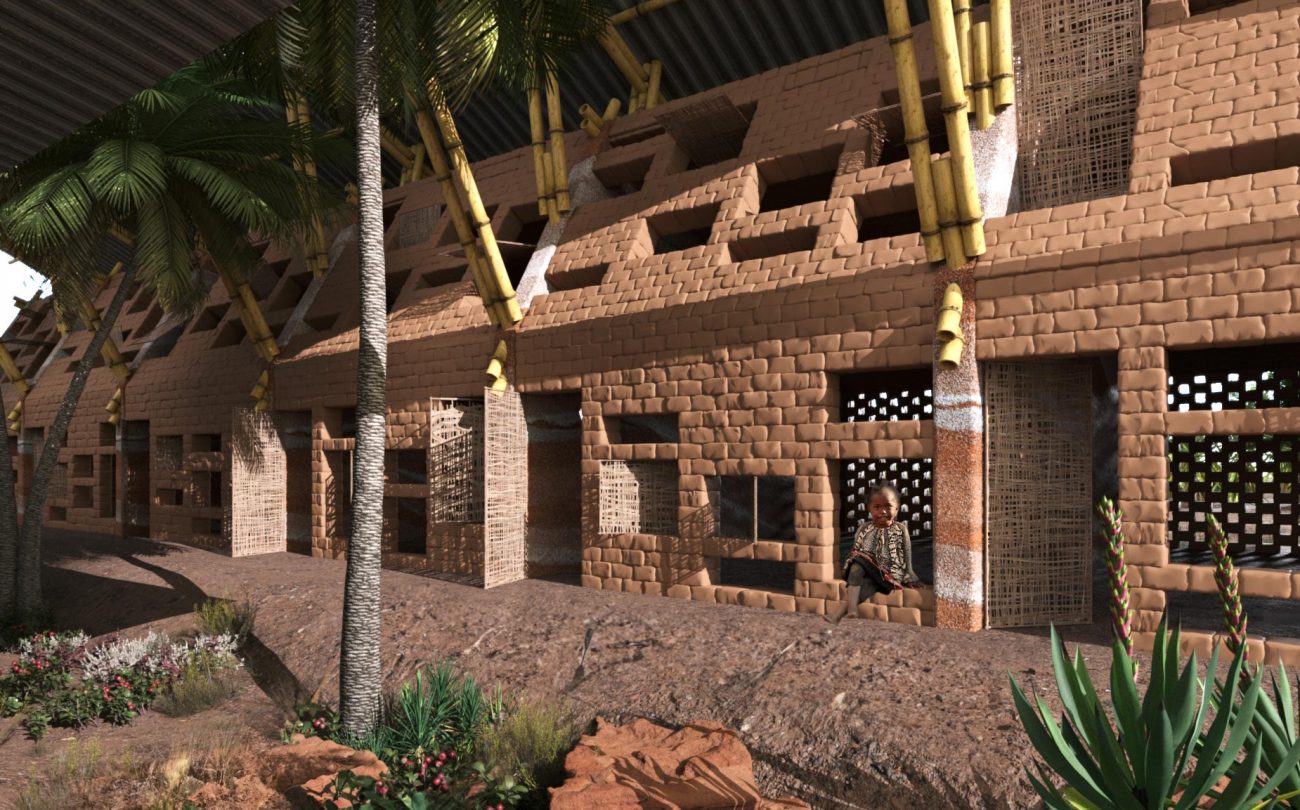
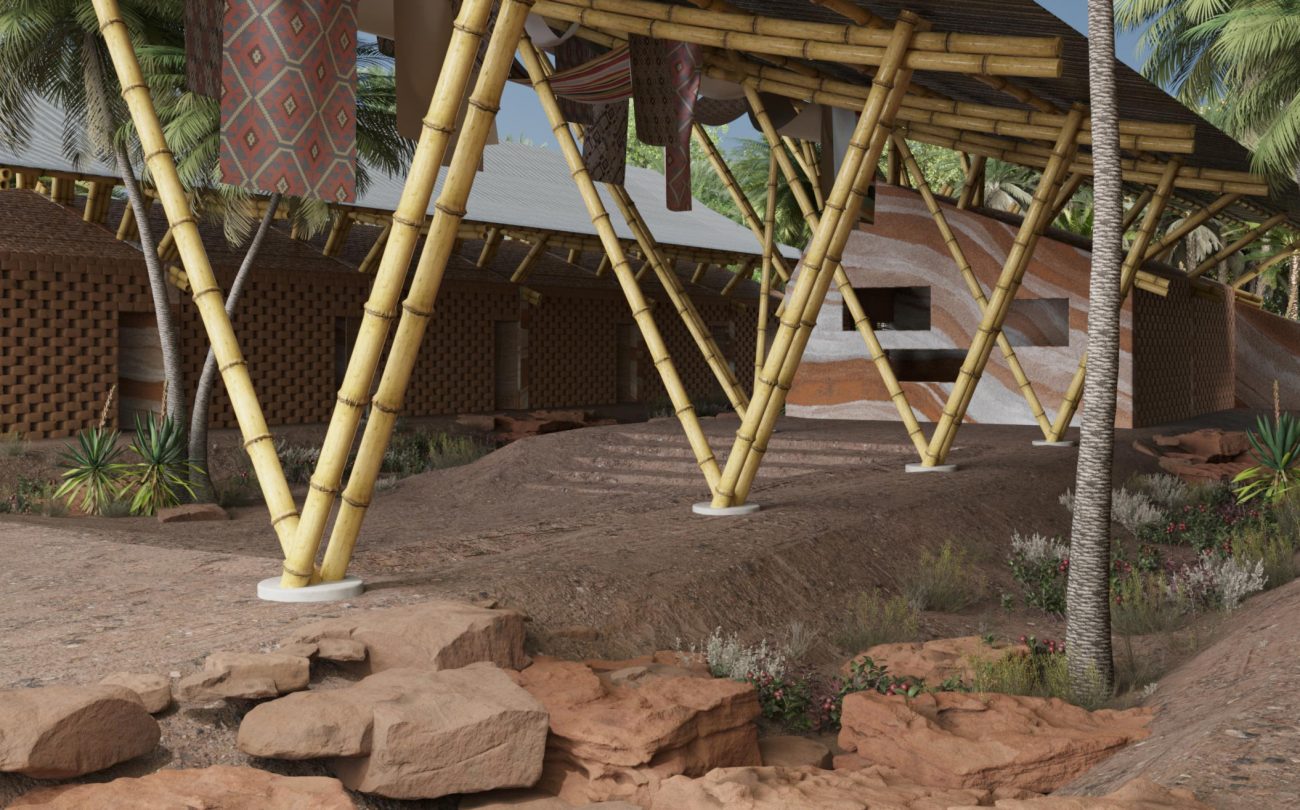
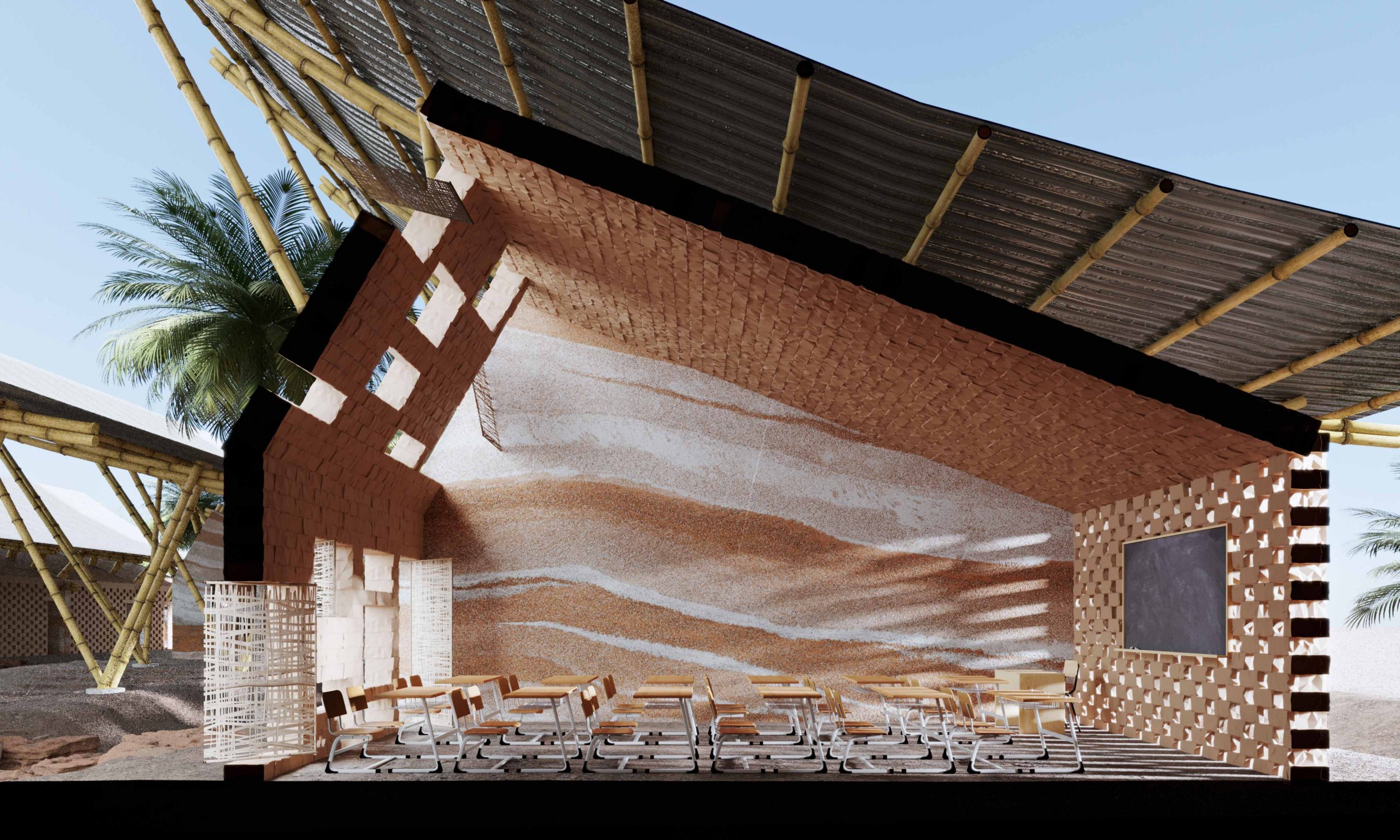
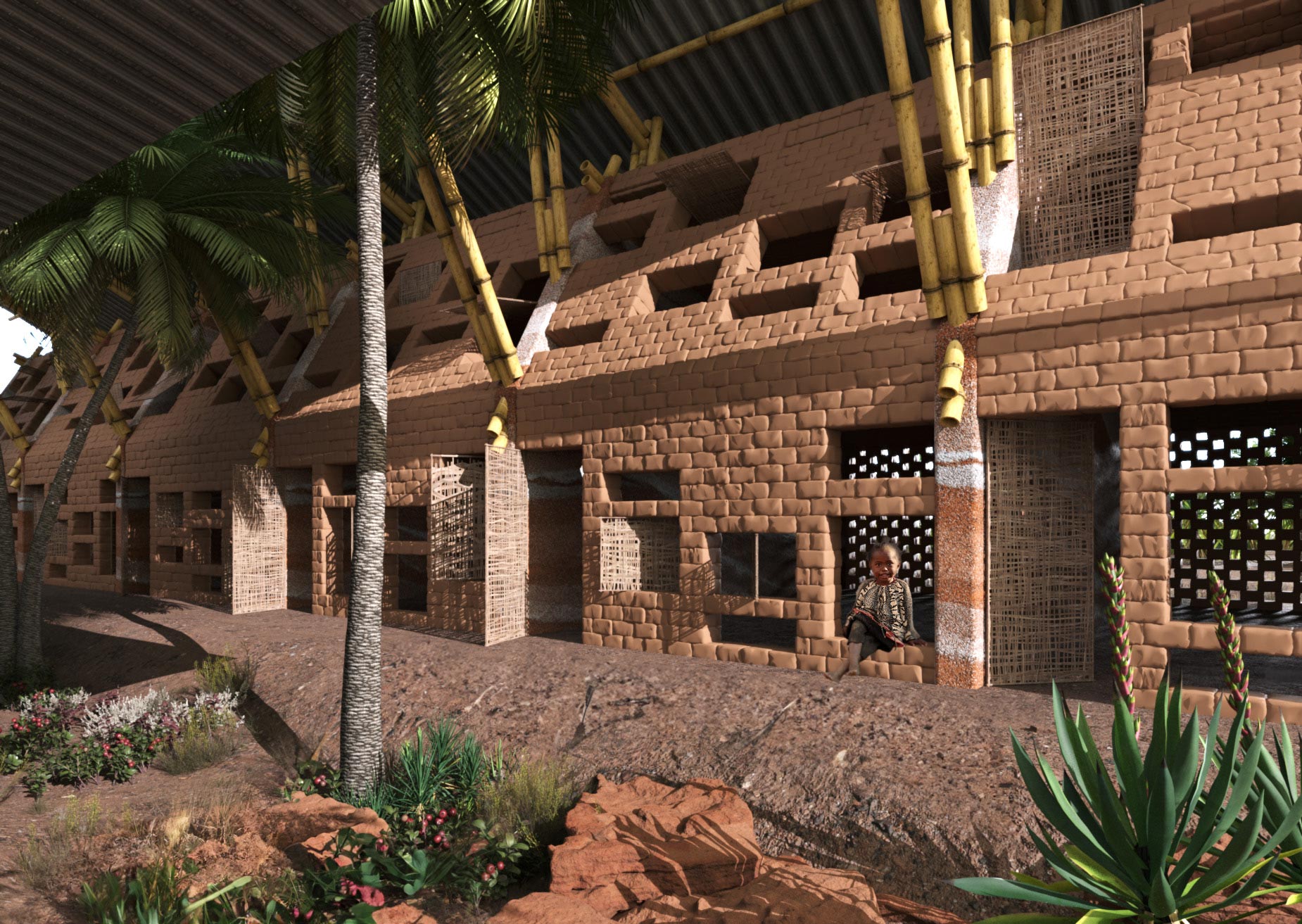
The program spaces are organized into three masses based on their functions, creating passages and ensuring accessibility throughout the structure. Each mass is carefully situated to block the hot and dry wind known as the “Harmattan” from the desert, while embracing the cool summer breeze from the ocean. Inspired by vernacular architecture in hot climates, the masses are enclosed by rammed earth walls and earth bricks, featuring limited ventilation openings to maintain a cool interior environment. Additionally, a secondary roof is proposed to provide overall protection to the structure. Canopies are strategically designed to cover each mass, allowing daylight to penetrate while blocking direct sunlight and enabling rainwater harvesting.
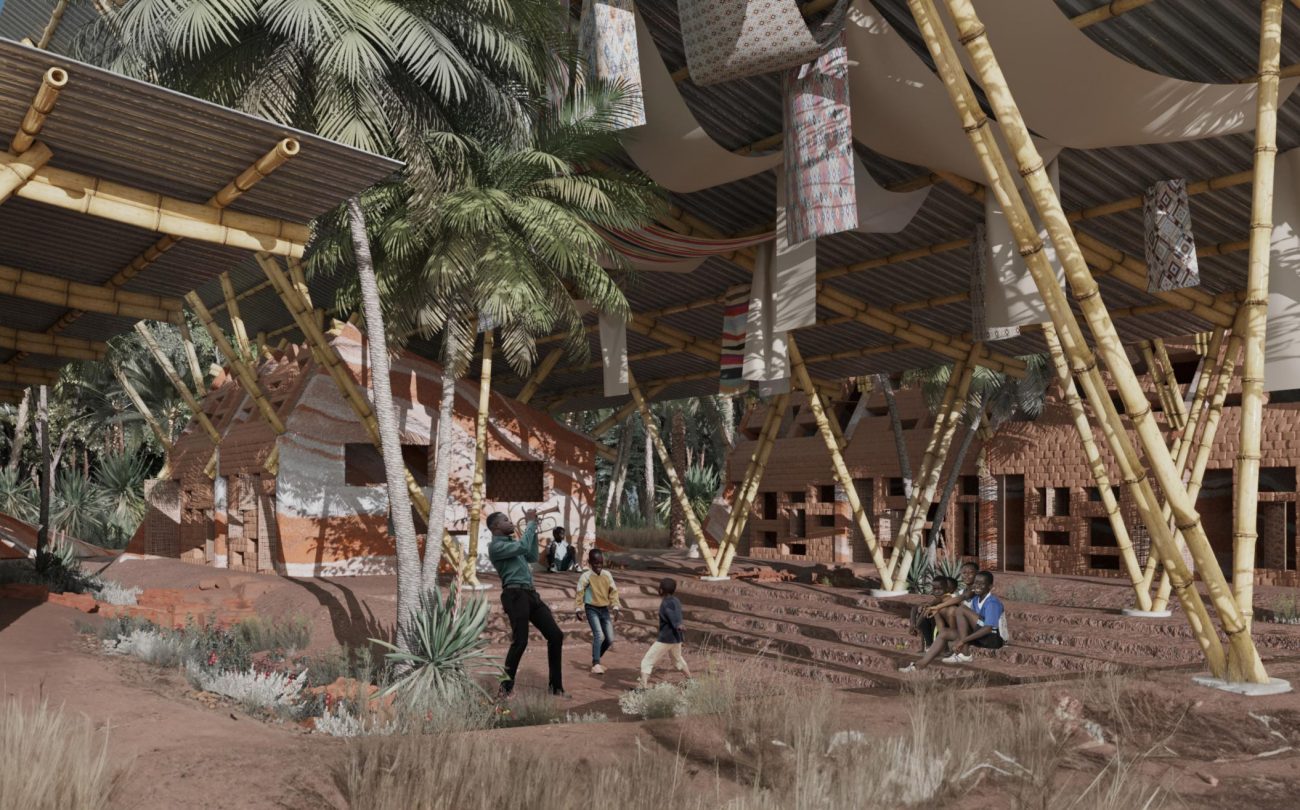
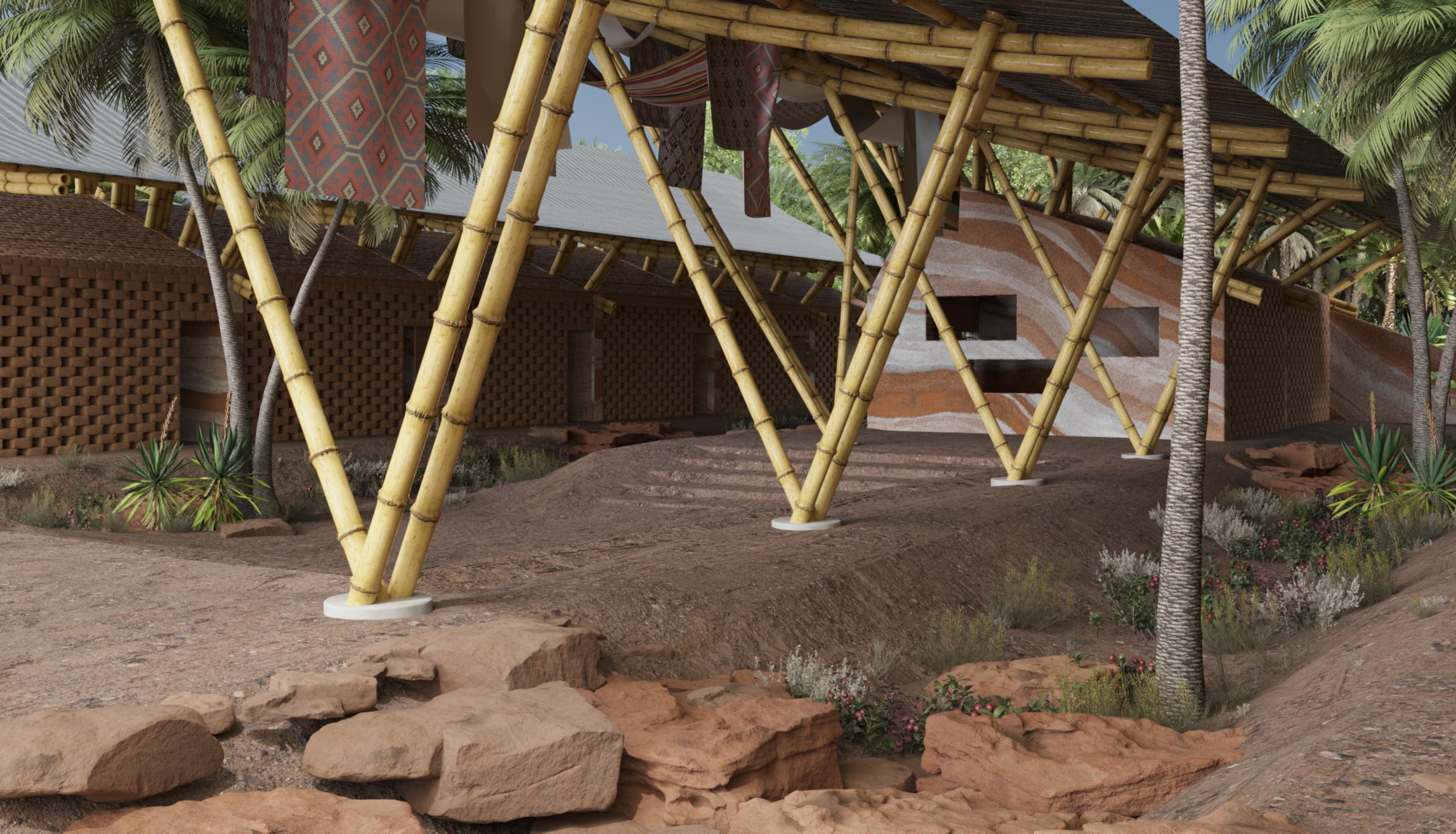
Rainwater is collected in the raingardens, located between the masses, creating a landscaped area, and providing children with the opportunity to receive agricultural education. A simple water-storage system is integrated with the gardens. During the rainy season, excess water is channelled through drainage at the bottom of the raingarden to the wells. In the dry season, the collected water can be used for irrigation or sanitary purposes.
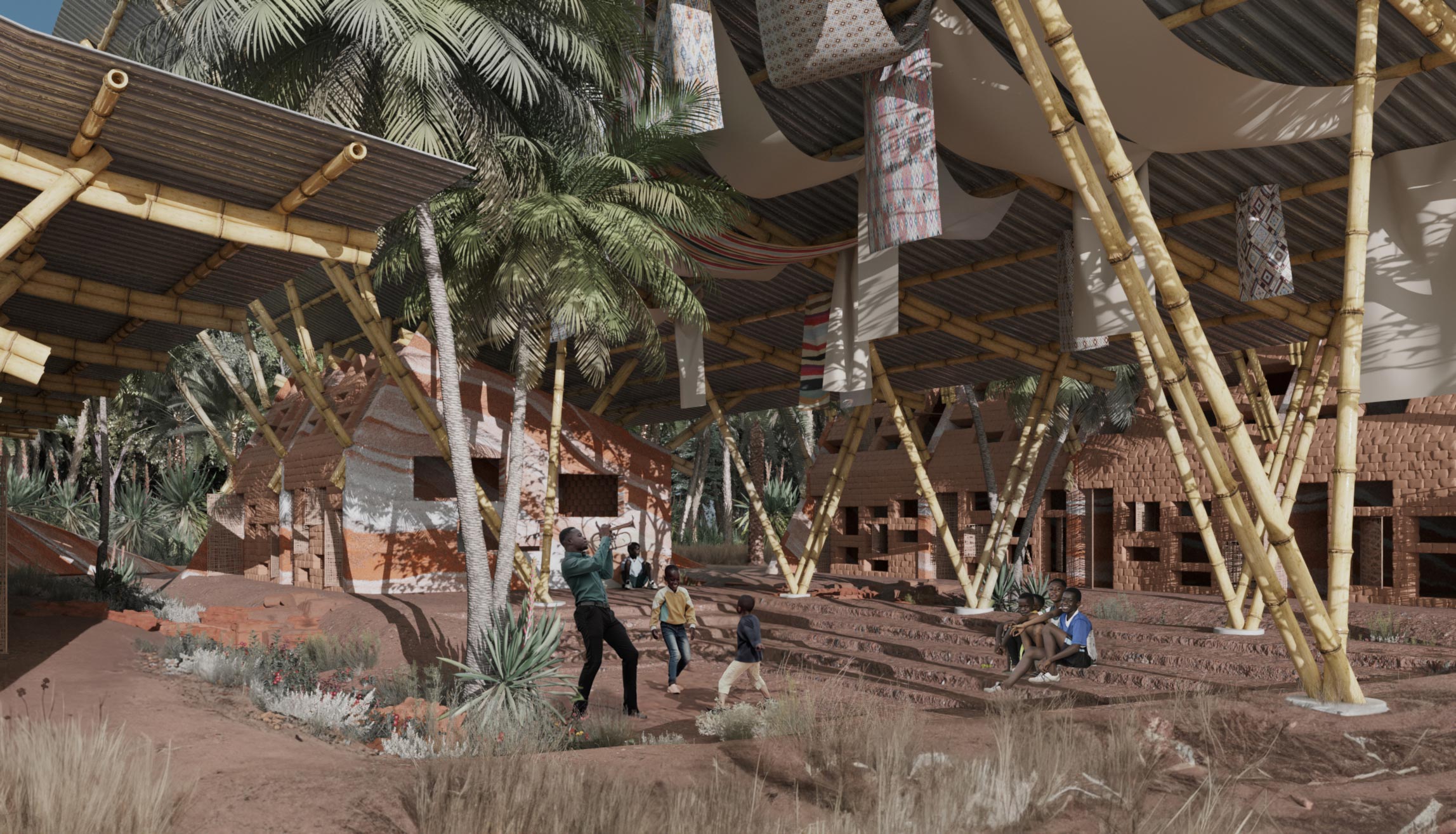
Functionally, the project includes a top covered outdoor space that serves as an open classroom or multipurpose area, welcoming visitors as well. Fabrics are suspended above this area to enhance the acoustic comfort and create a special ambience. The thermally comfortable classrooms, offices, raingardens, and multipurpose space all contribute to promoting education and improving the quality of life for the community.